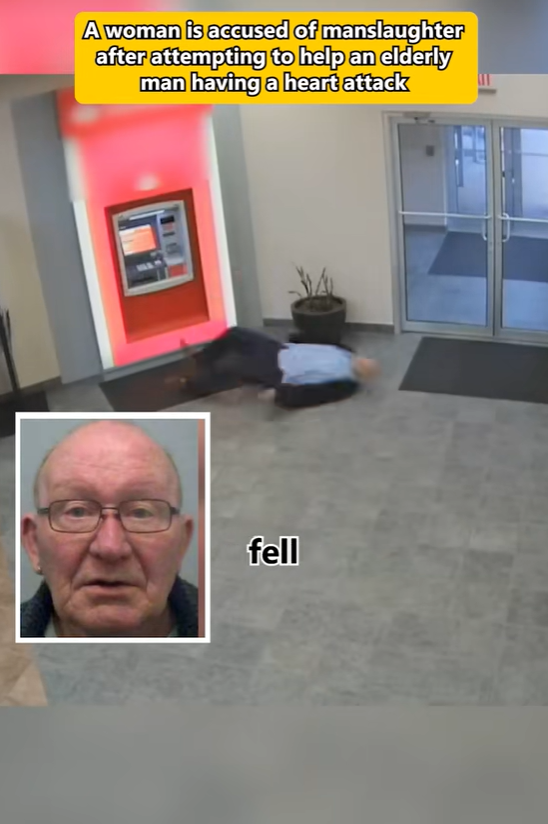
A woman who attempted to assist an elderly man during what authorities say was a medical emergency has now been charged with manslaughter, a case that has sparked public debate over bystander intervention, legal liability, and the limits of “good Samaritan” protections.
The incident occurred last month at a downtown bus terminal, where witnesses say an 82-year-old man collapsed near a seating area during the early afternoon rush. Several bystanders initially believed the man had tripped, but surveillance footage later showed him clutching his chest before falling to the ground.
According to police reports, the woman, identified as 34-year-old Angela Morris, rushed to the man’s aid after noticing he was unresponsive. Prosecutors say Morris attempted to perform chest compressions and then moved the man into a seated position, actions they allege may have worsened his condition.
Emergency medical services arrived approximately seven minutes later. The man was transported to Mercy General Hospital, where he was pronounced dead shortly after arrival. An autopsy later determined the cause of death to be cardiac arrest, with complications allegedly linked to physical trauma sustained during the attempted aid.
Last week, the county prosecutor’s office announced manslaughter charges against Morris, stating that her actions constituted “reckless conduct resulting in death.”
“This is not about punishing someone for trying to help,” said Assistant District Attorney Laura Chen during a press conference. “This case is about whether the defendant acted outside the bounds of reasonable care in a way that directly contributed to a fatal outcome.”
The decision to file charges has drawn criticism from legal experts and emergency response advocates, who warn that the case could discourage people from assisting during medical emergencies.
Witnesses at the scene described Morris as visibly distressed and desperate to help.
“She kept saying, ‘Please breathe, please breathe,’” said commuter James Alvarez, who was waiting nearby. “She didn’t seem reckless. She seemed scared.”
Morris, who has no medical training, reportedly told investigators she acted instinctively after seeing the man collapse and believed she was “doing what she had seen on television.”
Her defense attorney, Rachel Klein, argues that Morris should be protected under the state’s Good Samaritan law, which shields individuals from liability when they provide emergency assistance in good faith.
“The law exists precisely for situations like this,” Klein said. “Ms. Morris did not cause this man’s heart attack. She tried to save his life.”
Prosecutors contend that the protections do not apply because Morris allegedly ignored instructions shouted by another bystander to wait for paramedics and because she continued intervention despite the man showing signs of distress.
Medical experts remain divided. Some say improper movement of a cardiac patient can increase the risk of fatal complications, while others argue that delayed intervention poses an even greater danger.
“This is a gray area,” said Dr. Samuel Ortega, a cardiologist not involved in the case. “Early action can save lives, but untrained assistance can sometimes cause harm. That’s why public CPR training is so important.”
Family members of the elderly man expressed mixed emotions. In a statement released through their attorney, they said they believe Morris did not intend harm but want accountability for what they describe as “avoidable mistakes.”
“We lost a father and grandfather,” the statement read. “This case is about responsibility, not revenge.”
Public reaction has been swift. Advocacy groups have organized rallies outside the courthouse, warning that the charges could have a chilling effect on emergency response.
“If people are afraid of going to jail for helping, they’ll walk away,” said Karen Douglas of the Community First Aid Coalition. “That could cost lives.”
Morris was released on bond and is scheduled to appear in court next month. If convicted, she could face up to five years in prison.
As the case moves forward, it is expected to test the boundaries of Good Samaritan laws and raise broader questions about how society balances accountability with compassion when tragedy strikes.