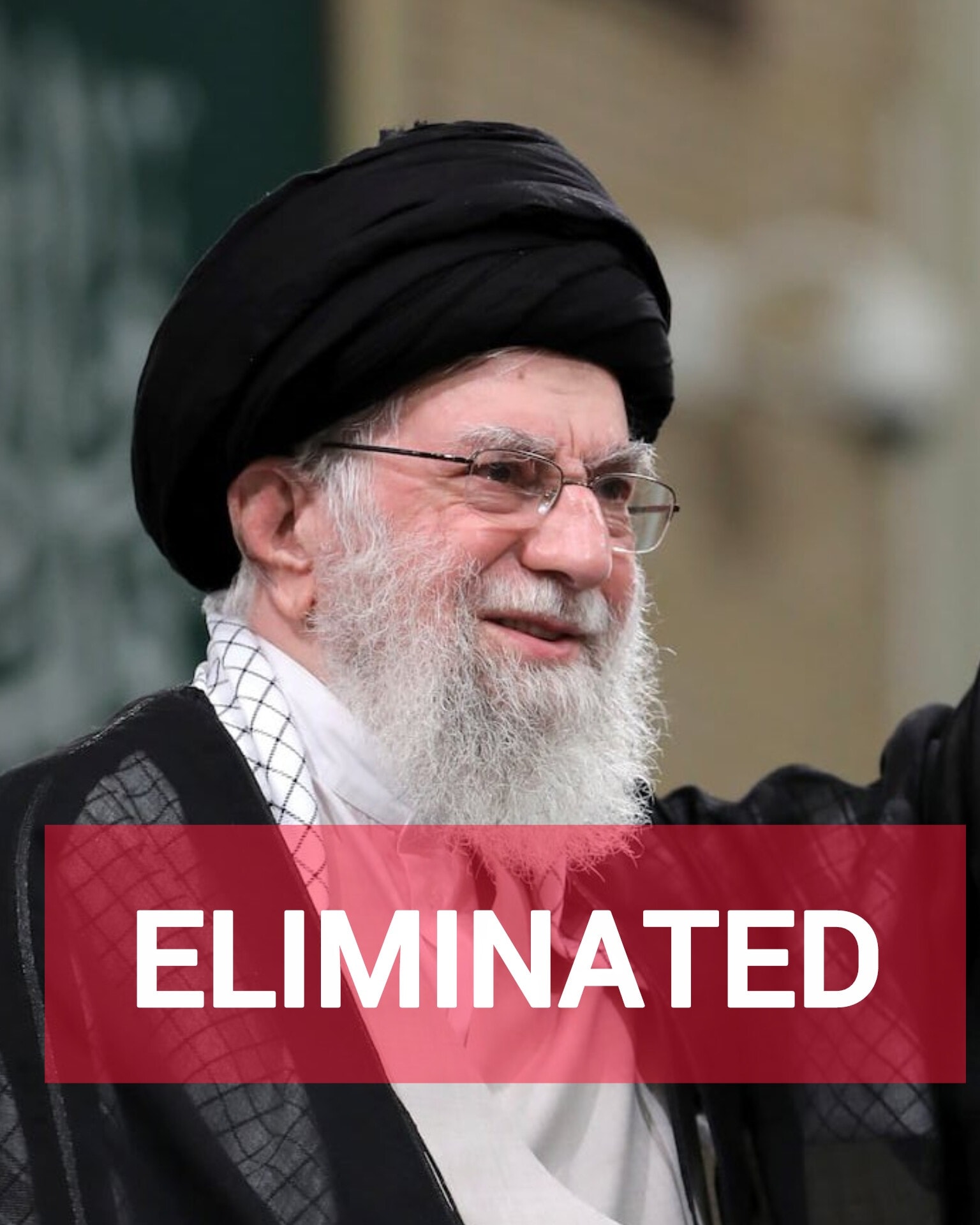
Supreme Leader Ayatollah Ali Khamenei Reportedly Eliminated — Israeli Officials Say
In what could be one of the most consequential moments in recent Middle East history, senior Israeli officials have asserted that Ayatollah Ali Khamenei, the Supreme Leader of the Islamic Republic of Iran, has been killed in a coordinated Israeli and U.S. strike on Iranian leadership targets. The claim — initially circulated by Israeli media and backed by statements from Israel’s national leadership — has not yet been independently verified and is sharply disputed by Iranian authorities.
Official Israeli Assessment
Israeli Prime Minister Benjamin Netanyahu told reporters that there are “many signs” suggesting that Khamenei is “no longer alive,” following bombardment that reportedly included more than 30 bombs on his residential and leadership compound in Tehran. Officials described the operation as part of a broader campaign — dubbed Operation Epic Fury — aimed at dismantling Iran’s political and military command structure and deterring Tehran’s regional influence.
Israeli sources have said multiple senior political and military figures were targeted and “eliminated” in the strikes, including commanders within the Islamic Revolutionary Guard Corps and those involved in Iran’s nuclear program.
Iranian Government Response
Tehran has categorically refuted the assertions that Khamenei has been killed. The Iranian foreign minister stated that the Supreme Leader and other top officials remain alive, safe, and in control, though regular updates from state channels have been interrupted amid a nationwide communications blackout. Reports indicate the Iranian government is preparing to release a direct address from Khamenei, although it has not yet been broadcast.
Iranian state media has confirmed that strikes have hit multiple military and leadership targets, causing domestic disruption and panic, but insists that the core leadership structure endures and that retaliatory actions will continue.
Military Escalation and International Fallout
The reported strike on Khamenei’s compound occurred amidst the opening hours of a significant U.S.–Israel air campaign against Iran, marking a dramatic escalation of hostilities in the region. Explosions have been confirmed in Tehran and across other Iranian cities, with Israel and the United States declaring their intent to degrade Iran’s ability to wage asymmetric warfare.
Iran has responded with missile launches against Israeli and allied positions in the Middle East, raising fears of wider instability across the region, including in Iraq, Syria, Bahrain, and the Gulf states.
Global Reactions
World powers have reacted with alarm. The United Nations Security Council has convened an emergency session to address the rapidly unfolding crisis. Key international leaders are calling for immediate de-escalation, warning that the conflict threatens global economic stability — particularly oil shipments through the Strait of Hormuz — and could draw in external powers.
Uncertainty on the Ground
Despite Israeli claims, independent confirmation of Khamenei’s death remains unverified. Intelligence sources note that communication with the Supreme Leader has been severed, and satellite images do show heavy damage to his known compounds — but the lack of definitive, on-the-ground confirmation means the situation is still evolving.
Iran’s own military command structure includes contingency planning for leadership succession, and regional allies have pledged solidarity with Tehran in the event of such a loss. Analysts warn that premature assumptions about Khamenei’s death could be exploited by both sides for propaganda and strategic advantage.