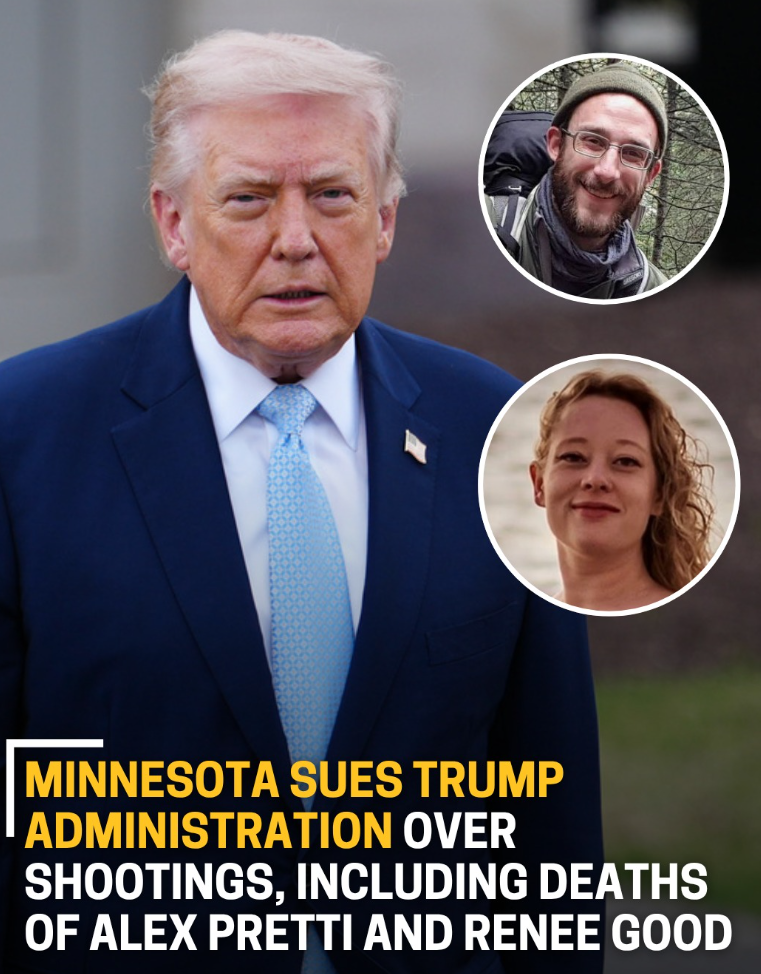
WASHINGTON (AP) — Minnesota officials sued the Trump administration on Tuesday for access to evidence they say they need to independently investigate three shootings by federal officers, including the killings of Renee Good and Alex Pretti.
“We are prepared to fight for transparency and accountability that the federal government is desperate to avoid,” Hennepin County Attorney Mary Moriarty told reporters.
The lawsuit marks an escalation in the clash between Minnesota leaders and the Trump administration over the investigations into the high-profile shootings by federal officers that sparked public outcry and protests. The Trump administration has suggested that Minnesota officials don’t have jurisdiction to investigate, but state officials insist they need to conduct their own probes because they don’t trust the federal government to investigate itself.
“There has to be an investigation any time a federal agent or a state agent takes the life of a person in our community,” Moriarty said.
Deputy Attorney General Todd Blanche has said that the department’s Civil Rights Division does not investigate every law enforcement shooting and that there have to be circumstances and facts that “warrant an investigation.”
DHS said Tuesday that Customs and Border Patrol is conducting its own internal investigation of the Pretti case. On Good, DHS said the matter remains under investigation but that footage shows Good impeded law enforcement operations and weaponized her vehicle, leading the officer to act in self-defense.
Minnesota’s lawsuit also demands access to evidence in a third case — that of Julio Cesar Sosa-Celis, who was shot and wounded in his right thigh by a federal agent in January.
Federal officials initially accused Sosa-Celis and another man of beating an Immigration and Customs Enforcement officer with a broom handle and a snow shovel. But federal prosecutors later dropped all charges against the men, and authorities opened a criminal investigation into whether two immigration officers lied under oath about the shooting.
Both officers are on administrative leave as ICE and DOJ conduct a joint review, DHS said Tuesday, adding in a statement that ICE is committed to transparency and accountability.
Minnesota’s lawsuit said the federal government is not permitted to “withhold investigative evidence for the purpose of shielding law enforcement officers from scrutiny where a State is investigating serious potential violations of its criminal laws, targeting its citizens, within its borders.”
Moriarty said Tuesday that the federal government “has adopted a policy of categorically withholding evidence,” calling the practice unprecedented and alarming. She said the lawsuit followed formal demands for evidence after the federal government blocked Minnesota investigators from accessing evidence related to the shootings.
Such cases by states against the federal government are highly unusual, said Rachel Moran, law professor at the University of St. Thomas in Minneapolis.
That is because local agencies don’t often try to investigate potential crimes by federal officers, and also because the federal government rarely refuses to cooperate. The opposite, where state officials might try to obstruct federal agents, used to be more common during the civil rights era, Moran said.
“The state should have a chance at success because, what their basic claim is, is that they have a right to review evidence regarding a possible crime,” Moran said. “They have not only a right, but an obligation to investigate whether officers have committed crimes in their jurisdiction.”