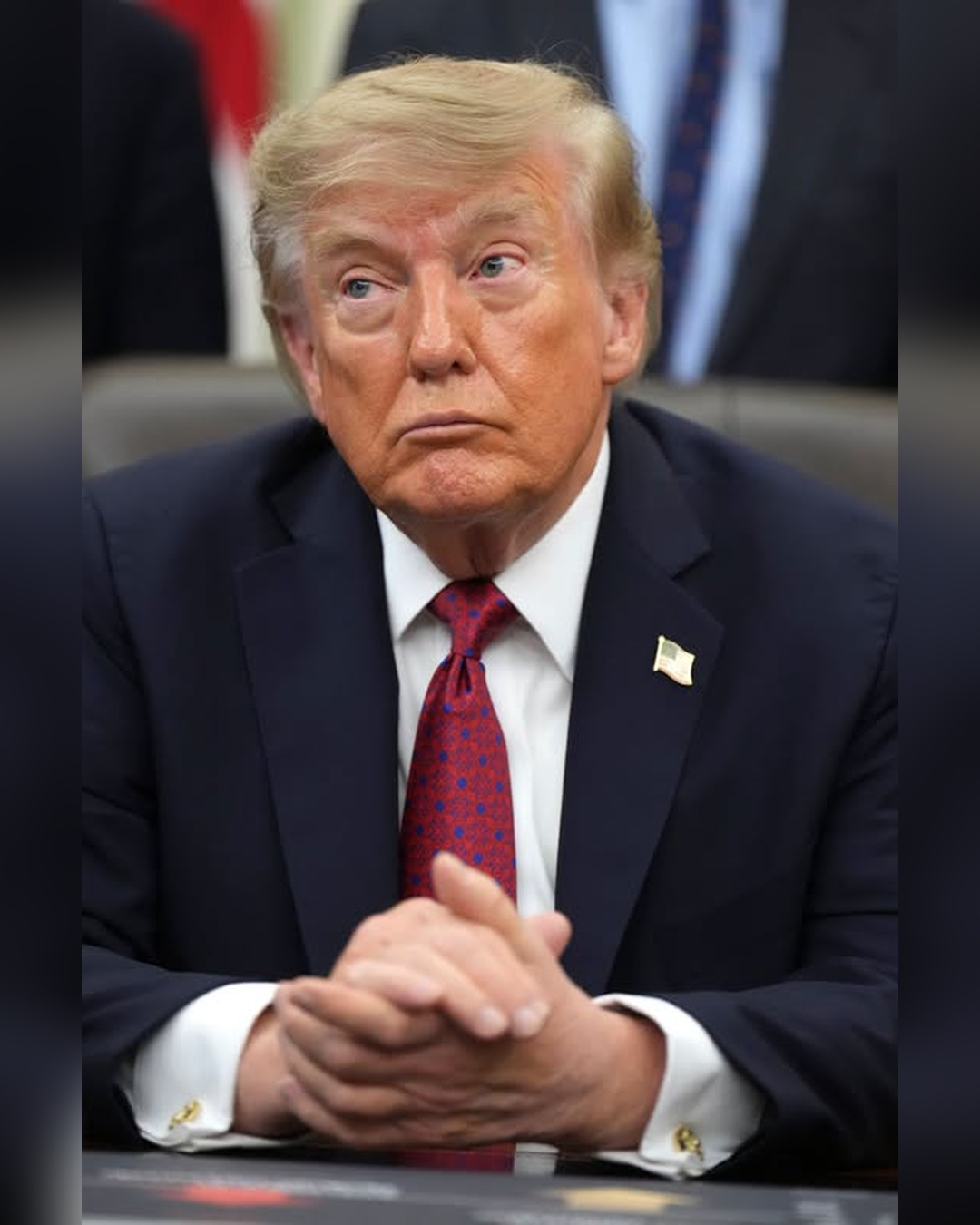
President Donald Trump issued a stark warning to Iran on September 1, 2026,
saying the country could be “totally wiped out” if Tehran repeatedly retaliated against American military strikes.
Trump delivered the warning during a phone conversation with Fox News correspondent Trey Yingst, as hostilities between Washington and Tehran intensified following renewed American military action.
“If they do respond, they’ll be hit much harder,” Trump told Yingst, adding that Iran would be “totally wiped out as a country” if the confrontation escalated further.
The remarks followed a new round of U.S. strikes against Iranian targets, marking another dangerous turn in a conflict that had already placed regional security under severe pressure.
Trump said American forces had targeted Iranian radar systems that Tehran was attempting to rebuild, describing the operation as a significant blow to the country’s military capabilities.
He also warned that any further Iranian retaliation would trigger a much larger American response, leaving little of the Islamic Republic’s military infrastructure intact.
The president’s comments reflected Washington’s effort to deter Iran from launching additional attacks against American forces and interests across the Middle East.
Iranian officials, meanwhile, have repeatedly described American military operations as aggression and maintained that Tehran reserves the right to respond to attacks against its territory.
The confrontation has created uncertainty about whether either side can prevent another cycle of strikes, retaliation, and increasingly forceful public threats.
Trump also expressed skepticism about the prospects for a diplomatic agreement, arguing that previous opportunities for negotiations had failed to produce a deal acceptable to Washington.
His warning came amid wider concerns about the Strait of Hormuz, a vital shipping route through which a substantial share of the world’s oil supply normally travels.

Any prolonged disruption to traffic through the strait could affect international energy markets, raise transportation costs, and increase pressure on economies dependent on imported fuel.
The conflict has already heightened concerns among regional governments, many of which host American military facilities while maintaining complicated relationships with Tehran.
U.S. allies in the Gulf have faced the difficult task of protecting their territory without becoming further entangled in a wider regional war.
Trump’s threat also raises questions about the distinction between striking military targets and threatening the destruction of an entire country.
Iran has a population of approximately 90 million people, making the potential humanitarian consequences of a nationwide campaign an enormous concern.
International humanitarian law requires parties to distinguish between military objectives and civilians, and prohibits attacks that fail to meet applicable rules on distinction and proportionality.
A threat directed at an entire nation does not, by itself, establish what military operations will ultimately occur, but it can deepen fears about escalation.
Diplomatic efforts have continued to face obstacles, with Washington demanding changes in Iranian conduct while Tehran questions the intentions behind American military pressure.
Analysts have warned that repeated retaliatory strikes could narrow the space for negotiations and increase the risk of miscalculation between two adversaries with a long history of mistrust.

For the Trump administration, the challenge is to deter further attacks while deciding whether military pressure can achieve its objectives without triggering a broader conflict.
For Iran’s leadership, responding to American strikes carries risks of further escalation, while choosing restraint could invite domestic criticism from hard-line political and military factions.
The September 1 warning captured the severity of the confrontation, but it did not establish that Iran would inevitably be destroyed or that a particular future attack was certain.
The conflict’s next phase will depend on military decisions, the responses of regional actors, and whether diplomatic channels can produce an arrangement that both governments are prepared to accept.