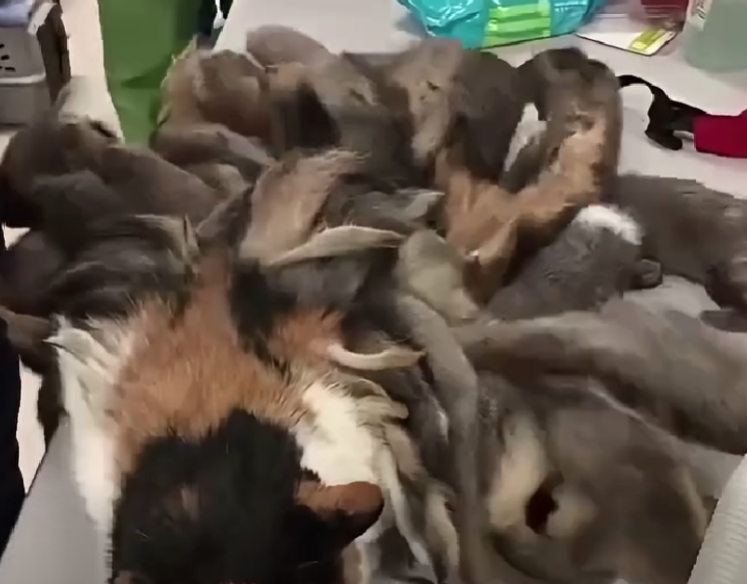
A mysterious animal hiding near an abandoned property prompted a concerned resident to contact local authorities,
setting off an animal welfare response that highlights the importance of paying attention when something seems wrong. What initially appeared to be unusual movement behind an empty house quickly became a situation requiring professional assessment, as officers attempted to determine whether the unidentified animal was injured, frightened, or in need of immediate assistance.
A Strange Discovery Behind an Empty House
It began with an unexpected observation in the quiet community of Greenhaven.
According to the account, a local resident noticed movement behind a property that had apparently been abandoned for some time.
The building appeared unoccupied, and the area surrounding it was not somewhere people would normally expect to find activity.
However, something near the rear of the house caught the resident’s attention.
An animal appeared to be hiding close to the structure, remaining partially concealed from view.
From a distance, the witness could not determine exactly what kind of animal it was.
Its unusual presence and appearance nevertheless raised concerns that something might be wrong.
Rather than approaching the animal or attempting to investigate the property personally, the resident decided to contact local authorities.
That decision initiated a response that would bring attention to a potentially vulnerable animal.
An Anonymous Tip Brings Police to the Property
When authorities received the report, the information available to them was limited.
They knew that an unidentified animal had been spotted behind an apparently vacant building, but several important questions remained unanswered.
Was the animal injured?
Had it been abandoned?
Was it simply seeking shelter?
Could it pose a danger to itself or anyone attempting to approach it?
Without a clear description or information about how long the animal had been there, officers needed to assess the situation carefully.
Police reportedly arrived at the property to investigate the concern.
Their initial responsibility was to determine whether the animal required assistance and whether specialized professionals should become involved.
The circumstances called for caution because frightened or injured animals may behave unpredictably when approached.
Even an animal that normally avoids confrontation can react defensively if it feels trapped.
What Officers Discovered Raised Concerns
Upon examining the area behind the abandoned house, officers encountered circumstances serious enough to request assistance from animal welfare professionals.
The available account does not specify the animal’s species, exact physical condition, or the particular observations that prompted the request.
However, the decision to involve specialists suggests that officers believed a more detailed assessment was necessary.
Animal welfare responders are trained to evaluate situations involving animals that may be injured, neglected, abandoned, or otherwise vulnerable.
Their involvement can help determine whether an animal needs medical attention, safe transportation, temporary shelter, or another form of assistance.
At this stage of the reported incident, the animal’s condition had not been independently established.
There was also no confirmed information indicating who owned the animal, how it reached the property, or whether any wrongdoing had occurred.
These unanswered questions made professional evaluation especially important.
Why Abandoned Properties Can Attract Animals
Empty buildings can become temporary shelters for a wide variety of animals.
Structures that are rarely visited may offer protection from harsh weather, loud environments, or human activity.
Overgrown vegetation, broken fences, and unused storage areas can provide hiding places for animals searching for security.
Domestic animals may also wander into abandoned properties after becoming lost or separated from their owners.
In other situations, wildlife may use vacant buildings as resting places or temporary habitats.
The presence of an animal near an empty house does not automatically indicate neglect or mistreatment.
However, certain warning signs may justify contacting professionals.
An animal that appears unable to move normally, has visible injuries, or remains in a potentially dangerous location may need assistance.
The difficulty is that these signs are not always easy to interpret from a distance.
That uncertainty is one reason reporting concerns to appropriate authorities can be safer than attempting an untrained rescue.
The Importance of Animal Welfare Professionals
When police encounter an animal welfare concern, specialized responders may be better equipped to evaluate the situation.
Animal control officers, rescue organizations, veterinarians, and wildlife specialists have different responsibilities depending on the type of animal involved.
Their training can help them identify signs of distress while minimizing unnecessary risk.
For example, an injured domestic animal may require veterinary examination and temporary shelter.
A healthy wild animal might simply need to be left undisturbed.
An animal trapped in an unsafe location may require specialized handling equipment.
The correct response depends on the circumstances.
Professional responders can also determine whether the animal has identification, such as a collar or microchip, when applicable.
That information may help reunite a lost pet with its owner.
In the Greenhaven account, the involvement of animal welfare professionals represented an important next step, although the outcome of their assessment has not been provided.
A Small Decision That Could Make a Difference
One of the most significant elements of the story is the concerned resident’s decision to speak up.
The witness did not know exactly what was happening behind the abandoned property.
There was no confirmed explanation for the animal’s presence.
Yet the resident recognized that the situation might deserve attention and contacted authorities.
This type of responsible reporting can be valuable in animal welfare cases.
Animals cannot explain their circumstances or directly request help in the way humans can.
As a result, signs of possible distress may go unnoticed unless someone recognizes them.
A person who observes an animal in a concerning situation does not need to determine the cause before reporting it.
Providing accurate information about the location, visible condition, and behavior of the animal can help professionals decide how to respond.
The key is to avoid exaggerating details or making assumptions about abuse or abandonment without evidence.
Why Approaching an Unknown Animal Can Be Risky
People who care deeply about animals may feel an immediate urge to intervene when they encounter one that appears frightened or injured.
Although that instinct often comes from compassion, approaching an unfamiliar animal is not always the safest choice.
A frightened dog or cat may bite or scratch if it feels threatened.
Wild animals may react defensively when cornered.
Some animals may also carry illnesses or parasites that require appropriate precautions.
Attempting to capture an animal without proper equipment can create additional stress or cause an existing injury to worsen.
For these reasons, contacting animal control or a qualified rescue organization is often the most appropriate first step.
If an animal is in immediate danger, local emergency services may be able to direct the caller to the correct responders.
In the reported Greenhaven incident, the resident’s decision to request assistance rather than personally confront the unidentified animal was a cautious approach.
Could the Animal Have Been Abandoned?
The location of the discovery naturally raises questions about how the animal ended up behind an empty property.
However, the available information does not establish that it was deliberately abandoned.
Animals can reach unfamiliar places for many reasons.
A pet may escape through an open gate, become disoriented, or wander far from home.
Wildlife may seek shelter in quiet spaces.
Some animals may also hide when frightened by traffic, loud noises, or unfamiliar surroundings.
Determining whether abandonment or neglect occurred requires evidence.
Investigators may need to establish ownership, review the animal’s condition, and examine the circumstances surrounding its discovery.
Without that information, assigning blame would be premature.
The immediate priority in a possible welfare situation is ensuring that the animal receives an appropriate assessment.
How Communities Can Help Protect Vulnerable Animals
Animal welfare is not solely the responsibility of rescue organizations or government agencies.
Community members can also play an important role by recognizing concerning situations and reporting them responsibly.
Residents who notice unusual animal behavior can document the location and describe what they observed.
Photographs taken from a safe distance may sometimes help responders identify an animal or assess the situation.
However, people should avoid entering unsafe buildings or trespassing on private property.
They should also avoid sharing unverified accusations about possible owners on social media.
Accurate reporting is generally more useful than speculation.
Local shelters and rescue groups may also benefit from volunteers, foster homes, donations, and community education.
These efforts can support animals that are lost, injured, or waiting for permanent homes.
The Questions That Remain Unanswered
Despite the attention surrounding the incident, several important details remain unclear.
The available account does not identify the animal, explain its condition, or describe what happened after animal welfare professionals were contacted.
There is no confirmed information about whether the animal required medical treatment or was transported to a shelter.
It is also unknown whether an owner was identified or whether authorities opened any further investigation.
These details matter because they determine how the incident should ultimately be understood.
An animal hiding behind an abandoned house could be experiencing a serious welfare emergency, but it could also be seeking temporary shelter.
Without additional evidence, neither explanation can be treated as established fact.
The account should therefore be viewed as a reported welfare concern rather than proof of deliberate mistreatment.
A Powerful Reminder About Compassion
The story from Greenhaven illustrates how an ordinary observation can lead to an important response.
A resident noticed something unusual, recognized the possibility of a problem, and contacted people equipped to investigate.
Police then sought specialized assistance when the situation appeared to require further evaluation.
Although the animal’s ultimate fate remains unknown, the sequence highlights the value of taking reasonable concerns seriously.
Not every animal found near an abandoned building is in danger.
Not every unusual sighting requires an emergency response.
But when there are credible signs that an animal may be suffering, timely reporting can help ensure that the situation is assessed.
Sometimes, meaningful action begins with something as simple as noticing what others have overlooked.
What Happens Next?
The next stage of the reported incident would depend on the findings of animal welfare professionals.
If the animal were injured, veterinary care might be necessary.
If it were a lost domestic pet, efforts could focus on locating its owner.
If it were healthy wildlife, specialists might determine that minimal intervention was appropriate.
For now, the account provides no verified conclusion.
What remains is a reminder that responsible community involvement can make a difference.
The resident behind the anonymous tip did not need to know every answer before asking for help. Recognizing a possible problem and reporting it was enough to bring the situation to the attention of authorities.
And while the mystery surrounding the animal behind the abandoned house has not been fully resolved, the broader message is clear: compassion, awareness, and timely action can help protect vulnerable animals when they need someone to notice.
Editorial note: This article expands on the supplied account. The location, incident details, and outcome have not been independently verified, and no additional rescue outcome has been invented.