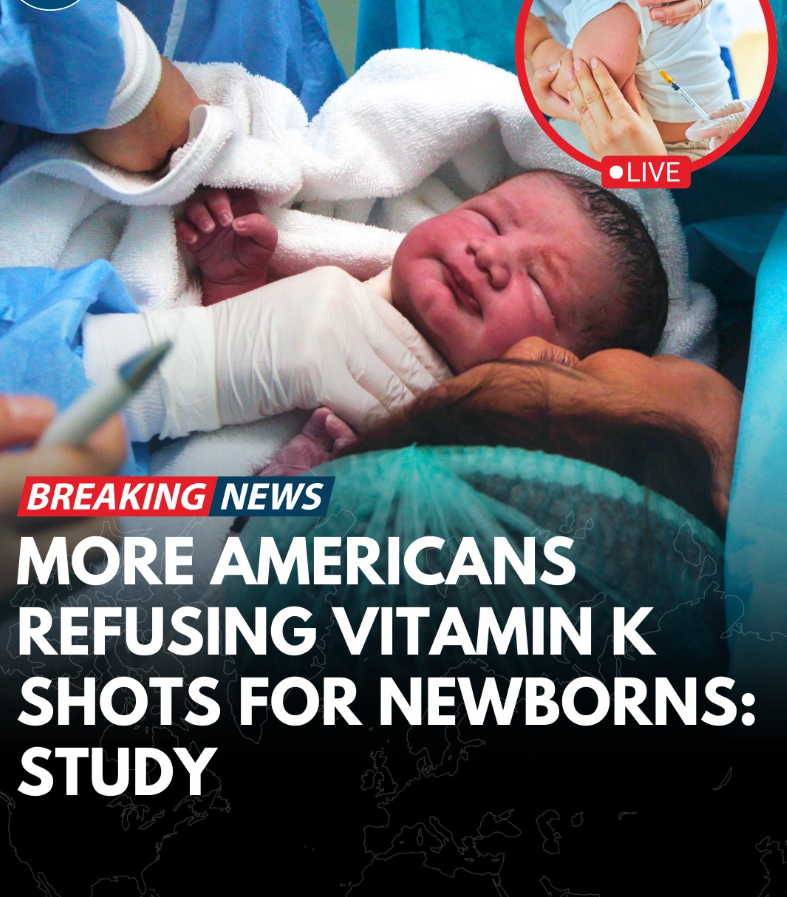
A routine medical practice that has protected American newborns for over six decades is now facing unexpected resistance. Hospitals across all 50 states are reporting a troubling pattern, one that has left pediatricians and neonatologists increasingly alarmed.
For most parents, the first hours after birth involve a whirlwind of emotions, paperwork, and medical procedures. Among these procedures is a simple injection that takes mere seconds to administer. Most families accept it without question. But a growing number are saying no.
A study published in the Journal of the American Medical Association in December 2025 has quantified what many doctors suspected but couldn’t prove. And the findings have sparked urgent conversations in medical communities nationwide.
What would lead parents to refuse a decades-old preventive measure for their newborns? And what happens to babies who don’t receive it?
Researchers analyzed electronic medical records from more than 5 million newborns delivered in 403 hospitals between January 2017 and December 2024. Data came from Epic Systems’ Cosmos database, covering facilities across all 50 states and Washington, D.C.
Results revealed that roughly 4% of babies born during this period did not receive vitamin K shots. In raw numbers, that translates to approximately 200,000 newborns.
More concerning than the overall percentage is the trajectory. In 2017, refusal rates sat at 2.92%. By 2024, that figure had climbed to 5.18%. After adjusting for various factors, researchers found the rate rose from 2.57% to 4.62% over the same period.
Dr. Kristan Scott, a neonatologist at Children’s Hospital of Philadelphia and the study’s lead author, said he and his colleagues had noticed more parents declining the shot in their own practices. That observation prompted the research. Still, the results caught him off guard.
“The increase is not surprising, but the degree to which it did increase did catch me off guard,” Scott said.