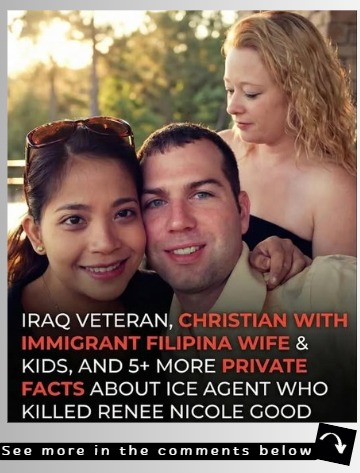
As Minneapolis continues to grapple with the death of Renee Nicole Good, attention has increasingly turned to the federal agent whose actions are now under investigation.
The incident has sparked protests, public debate, and urgent calls for transparency, but it has also pulled a normally private figure into the national spotlight. Jonathan E. Ross, a veteran officer with U.S.
Immigration and Customs Enforcement, has become a central focus as investigators work to determine what happened and why. With emotions running high, newly surfaced records and firsthand accounts are shaping a more detailed—and more complicated—picture of the man behind the badge.
Ross has served for roughly a decade on ICE’s special response team, a role that involves high-risk enforcement operations. Federal records show that in June 2025, he was injured during an arrest attempt in Minnesota when a suspect tried to flee in a vehicle, briefly dragging Ross before he broke free.
He was treated for injuries to his arms and hands. Officials have referenced this earlier incident as context for understanding Ross’s mindset during the fatal Minneapolis encounter.
During a White House briefing, Vice President J. D. Vance cited that experience while defending the officer, though differences between public statements and court filings have prompted renewed scrutiny and reinforced calls for an independent review.
Ross has not spoken publicly since the shooting, but his father has stepped forward to defend his son’s character, describing him as disciplined, family-oriented, and committed to his duties.
Public records indicate Ross has lived in the Minneapolis area for more than ten years and previously served in the military. Neighbors describe him as quiet and private, noting past political displays while emphasizing that his family largely kept to themselves.
At the same time, details about his household—including close ties to immigrant communities through his wife’s family—have added layers to the public conversation, highlighting the complex intersection of personal life and professional responsibility.
The incident itself took place on January 7, 2026, during a federal operation in the Powderhorn Park neighborhood.
Video footage circulating online shows agents surrounding a vehicle moments before shots were fired, followed by a crash that brought the scene to an abrupt end.
The Department of Homeland Security has said officers believed the vehicle posed an immediate threat and that force was used in self-defense.
Witnesses, however, have described confusion and fear, fueling questions about use-of-force decisions and emergency response. As vigils continue and officials urge patience, the case remains under active investigation—now standing as a focal point in broader discussions about federal enforcement, public trust, and accountability in moments where seconds can change lives.