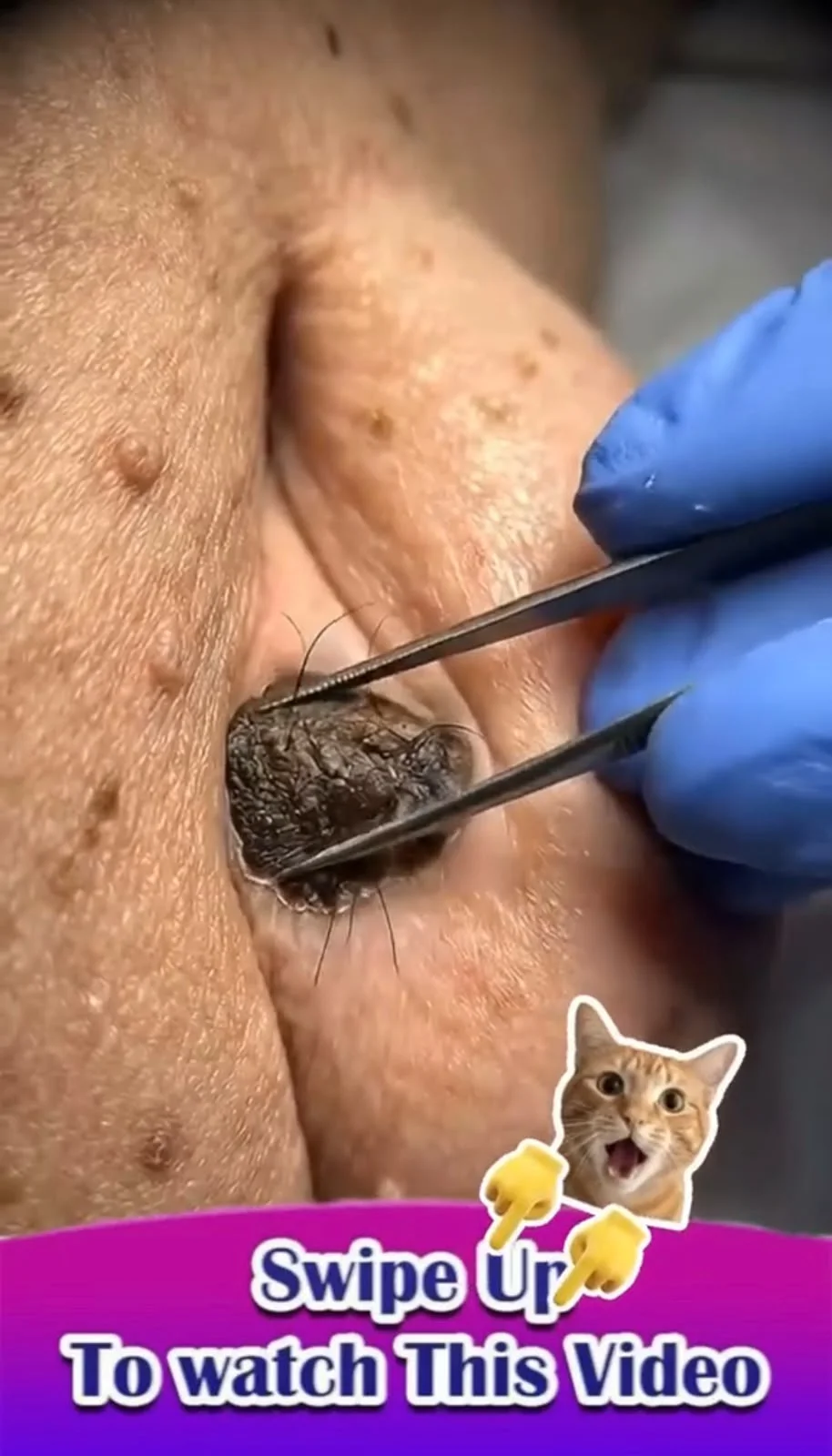
A close-up image shows a large, dark, insect-like object firmly attached near the outer ear,
while a medical professional uses specialized forceps to remove it. The object appears consistent with a tick-like arthropod, although the exact species cannot be confirmed from a photograph alone.
What makes this situation particularly concerning is the apparent size and firm attachment. Ticks can remain attached while feeding, and some species can transmit infections to humans. Prompt removal is therefore important.
Why Ticks Can Be Difficult to Notice
Ticks are remarkably good at hiding among hair and skin folds. The area around the ear can be particularly easy to overlook during a routine skin check.
After spending time in grassy, brushy, or wooded environments, experts recommend checking the entire body—including the hair, scalp, and around the ears—for attached ticks.
Why Prompt Removal Is Important
An attached tick may transmit disease-causing organisms. The risk depends on the tick species, the infection it may carry, and how long it remains attached.
The CDC recommends removing an attached tick as soon as possible rather than waiting for symptoms to appear.
Possible symptoms following a tick exposure can include fever, chills, headache, fatigue, muscle or joint pain, and rash. If these develop in the days or weeks after a suspected tick bite, medical advice should be sought.
How a Tick Should Be Removed
For a tick attached to ordinary skin, the CDC recommends using clean, fine-tipped tweezers, grasping the tick as close to the skin’s surface as possible, and pulling upward with steady, even pressure.
The tick should not be twisted, jerked, or squeezed. After removal, the bite area and hands should be cleaned thoroughly.
When a suspected tick is deep around the ear or difficult to reach, professional assistance may be the safest choice.