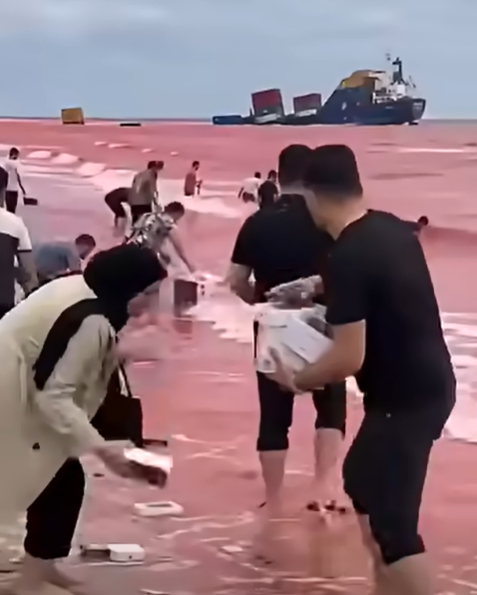
STRAIT OF HORMUZ — Surreal footage circulating widely across social media platforms
shows hundreds of sealed iPhone retail boxes and designer perfume packages bobbing on the open water in the Strait of Hormuz, following the destruction and sinking of a commercial container ship.
The incident occurred when the Singapore-flagged container vessel GFS Pride—operated by UAE-based GFS Ship Management—caught fire and sank while transiting the heavily contested strategic waterway carrying commercial cargo out of Dubai.
Key Highlights of the Incident
- Crew Rescued: All 21 crew members aboard the vessel were safely evacuated with no reported injuries, according to Singapore’s Maritime and Port Authority (MPA).
- Disputed Cause: Iran’s Islamic Revolutionary Guard Corps (IRGC) claimed the vessel struck a naval mine after navigating what Tehran described as an unauthorized transit corridor. Conversely, regional maritime monitoring agencies reported the ship was struck by an unidentified projectile before catching fire.
- Floating Cargo: Eyewitness video shows local fishermen and mariners in small motorboats maneuvering through the debris field to scoop pristine, factory-sealed iPhone packages and luxury fragrance bottles directly out of the sea.
Incident Summary
| Fact | Detail |
| Vessel Name | GFS Pride |
| Flag / Operator | Singapore Flagged / UAE-based GFS Ship Management |
| Route | Dubai to regional destination ports |
| Status of Crew | 21/21 evacuated safely |
| Primary Cargo Lost | Consumer electronics (iPhones), luxury cosmetics & perfumes |
| Conflicting Claims | IRGC claims mine strike; MPA/Maritime Security cites missile or unknown projectile |
Growing Escalation in a Critical Shipping Lane
The sinking of the GFS Pride highlights intensifying risks along the Strait of Hormuz, through which roughly one-fifth of the world’s petroleum and a vast volume of commercial freight move daily.
Maritime security analysts warn that increasing confrontations and uncoordinated transits through unauthorized maritime routes risk further disrupting global supply chains and spiking insurance premiums for commercial freight operating in the Gulf.
While international naval assets continue to patrol nearby international waters to reassure commercial shipping, the sight of high-value consumer goods drifting along a military choke point serves as a stark visual reminder of the ongoing volatility in regional maritime trade.